

The Last Crusader
The Chain Mail Gaze VII: Decolonic Irrigation

Another rough cut from the book-to-be, in which I attempt to locate a Crusading continuation. Still needs work but you’ll get the idea. Upcoming things down below.
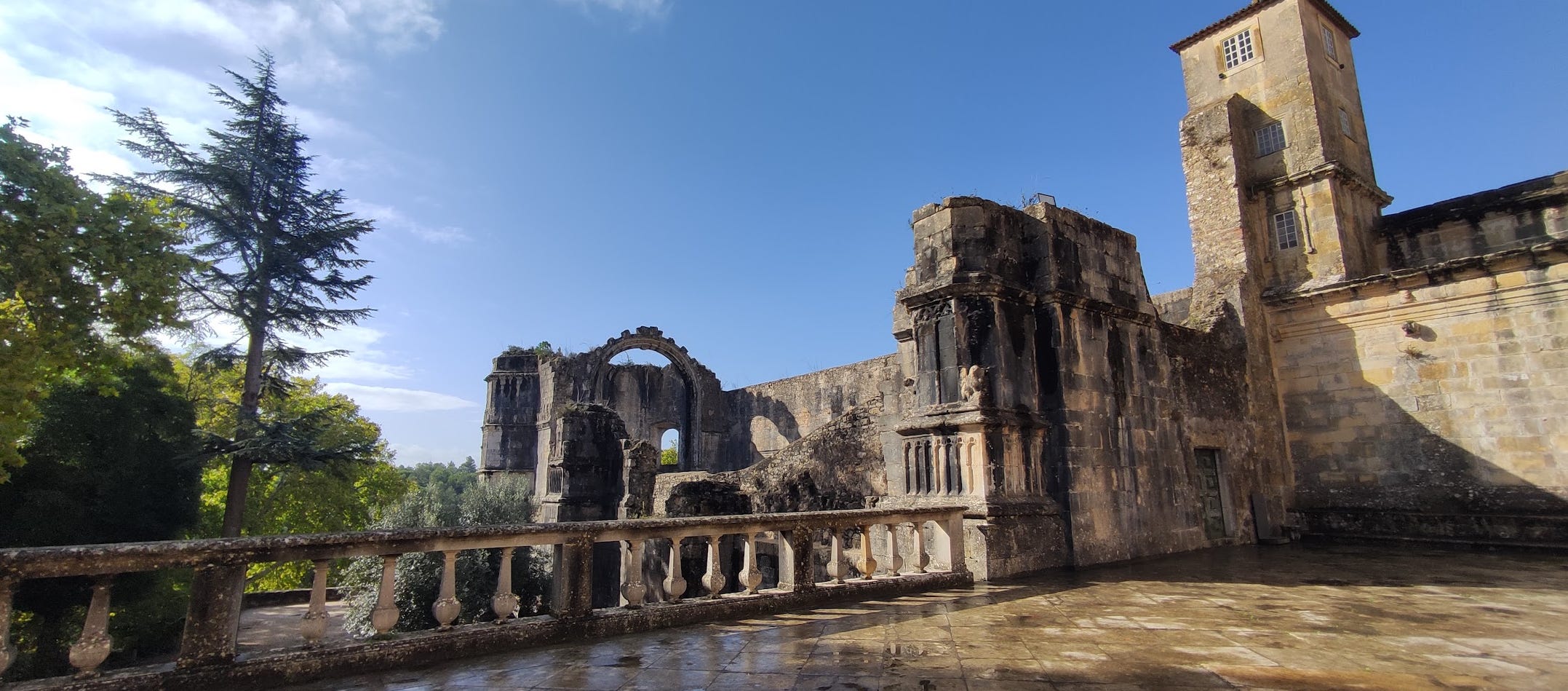
A series of geopolitical events delivered, eventually, a certain Genoese navigator to the Caribbean, whilst in search of a faster western route to South Asia. One often overlooked link in the causal chain connects the Knights Templar to the Portuguese ‘Age of Discovery’ which was undoubtedly the direct precursor to Europe’s colonial frenzy. When the French crown orchestrated the sudden liquidation of the Templar hyperstitution, the Iberian branch successfully evaded destruction by reconstituting itself as the Order of Christ under the newly formed Kingdom of Portugal as a non-sovereign entity. Ordem Militar de Cristo duly participated in the military and religious aspects of Portuguese life, amassing castles, monasteries, and land holdings such as the monastery in Tomar which contains a replica of the Church of the Holy Sepulchre.
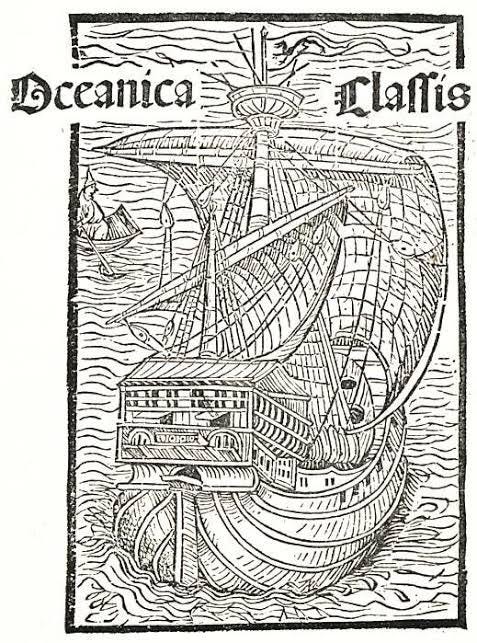
It was under the governorship of Infante Dom Henrique (Henry the Navigator) that this post-Templar operation harnessed its accumulated wealth, shipbuilding prowess, and advanced navigational knowledge to mint Portugal’s ascendancy. The Order of Christ was, read through the lens of the successes of the ‘Reconquista’ of the Iberian peninsula, a continuation of the Crusading mission by other means, preserving the shadow deep state type structures of warrior-monastic administration which would ultimately facilitate the last Crusader, Christopher Columbus himself, and the catastrophic dawn of European mass colonisation.
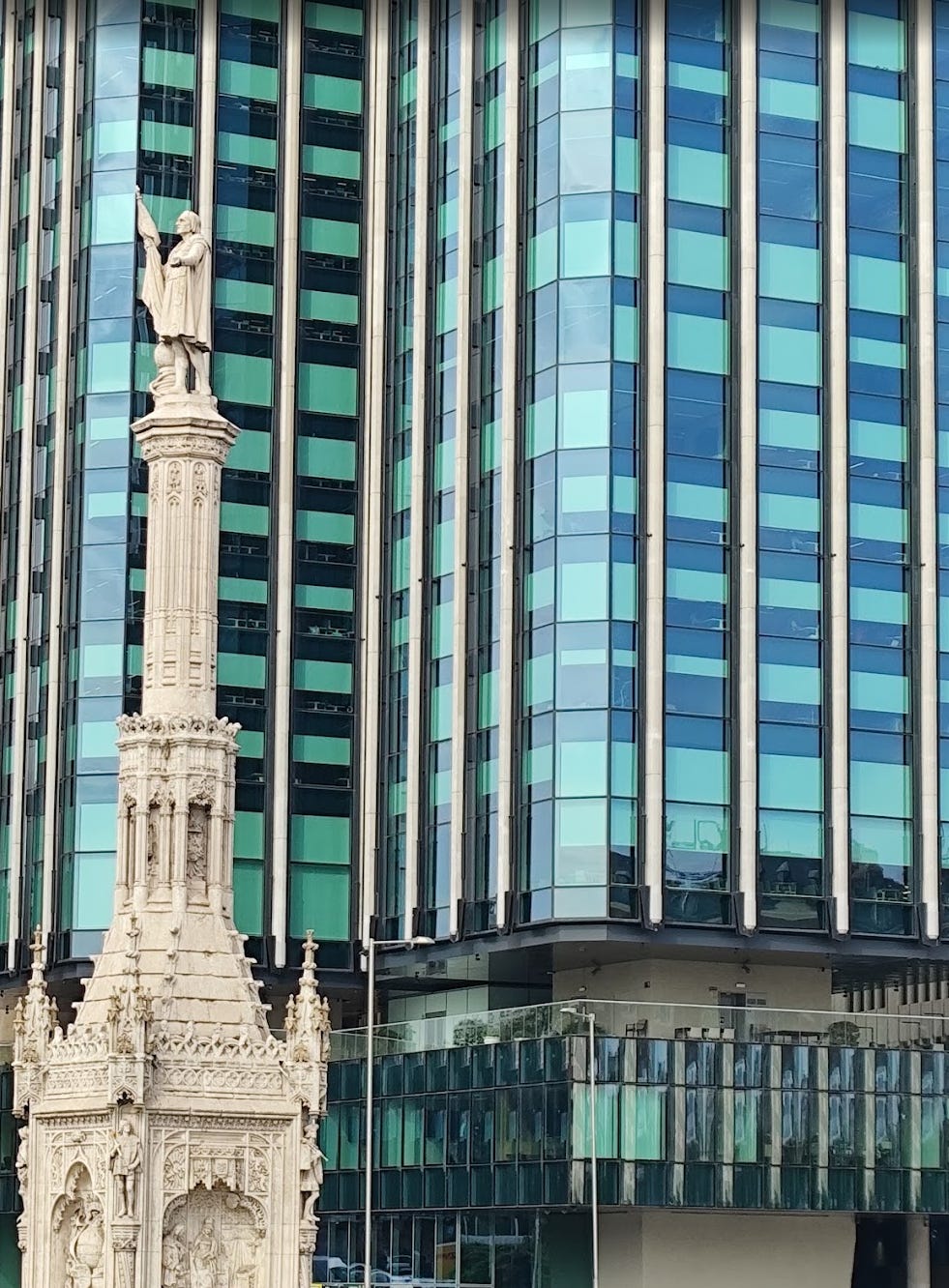
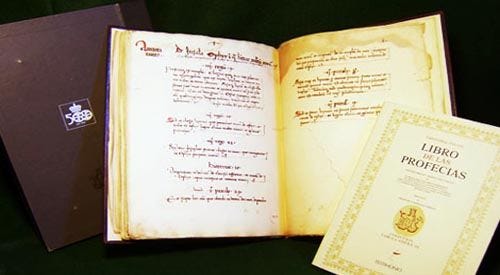
Far from the sanitised profile of a secular, speculative adventurer or a modern state-builder, any scratching of the surface readily reveals that Christopher Columbus was an apocalyptic zealot consumed by an explicitly millenarian obsession. His private journals and his dense, theological Libro de las Profecías (Book of Prophecies, 1501-1505 CE) likely produced with the assistance of Carthusian monk Gaspar Gorricio, very clearly lay out the ultimate geopolitical goal of his transatlantic enterprise. The manuscript was prepared after Columbus returned in chains from his third voyage, aiming to persuade the Spanish crown to finance a fourth expedition for the complete Catholic reconquest of Jerusalem, finding the Garden of Eden, and to restore the ancient Temple. Columbus referred to the work not as a book of prophecies per se, rather as a means to persuade Ferdinand and Isabella that his discoveries were the fulfillment of biblical prophecy and to secure funding for a Crusade to reclaim Jerusalem.
Believing himself to be a providential agent operating in the twilight years of Earth’s predetermined lifespan, Columbus pitched his navigational enterprise to Ferdinand and Isabella of Spain as an economic engine that could power this final Crusade. He calculated that the commercial exploitation of his new trade route to India would rapidly allow the Spanish crown to finance fifty thousand infantry and five thousand cavalry – a huge army by the standards of the day – to wrest the Holy Sepulchre from Muslim control. Columbus saw the violent subjection of the New World as a transactional means to an end: a mechanism for the liquidation of the planet’s treasures to underwrite the bloody triumph of Catholic supremacy in the Old World.
“The discovery of the New World induced an impatience with the Old. In vastly extending the range of the Renaissance imagination, it made Europe appear ever more despoiled, damned, and doomed, and prompted millenarian dreams of taking flight from this waning world in quest of new beginnings. In the New World, eschatalogical expectations of renewed perfection came into earthly focus. After Columbus, paradise became more than just a vision; it became a place.”
David F. Noble, The Religion of Technology, 1997, p. 38.
This apocalyptic, Crusadist core of Columbus’ persona has been carefully erased by contemporary Spanish “decolonial” historiography: one might say, that in their eagerness to reframe Columbus exclusively through the lenses of early modern capitalism, market extraction, and good-old-fashioned European greed, the psycho-political reality of Crusadist colonial conquest has been blithely handwaved away. By recasting Columbus as a mere bourgeois mercantilist, the explicit religious fanaticism that animated his violence is ignored, diluting a millenarian holy war as a commercial business venture. From this vantage, it seems that the colonisation of the Americas can be understood as yet another franchise of the endless Crusade ‘sinematic universe’.
In the zealot’s mind, transaction was transubstantiation: the stolen riches were ultimately earmarked for the apocalyptic cleansing, yet again, of the Levant. Columbus as “Christ-bearer” (Christoferens) divinely chosen to initiate the end times. Perhaps, I would disagree with the delineating Columbus as literally the very last Crusader, if only because in my mind the Crusades are not (and perhaps can never be) in a state of absolute conclusion. But it is certainly arguable that Columbus was the last Catholic Crusader, as what came afterwards can be seen more in the logics of nationalism and postnational technocapitalism.
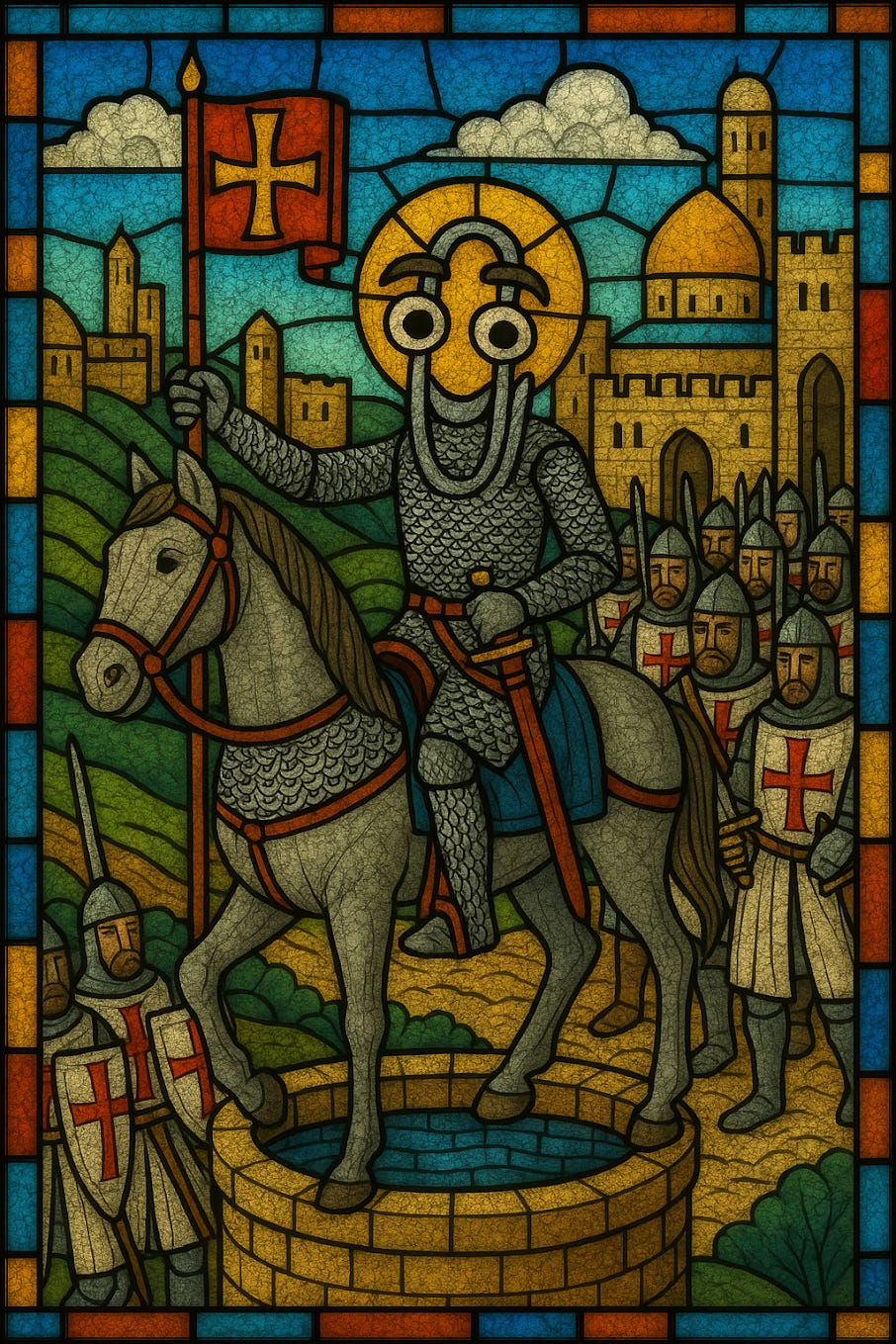
Centuries later, the modern manifestation of what we now call crusader medievalism was forged not in the mud of the medieval Levant, but in nineteenth-century romanticism, where the dark and raw bloodlust of the historical campaigns were repackaged with a noble aesthetic of chivalry. This myth-making apparatus reanimated the Crusades as the ultimate expression of a muscular Christianity: a toxic ideological cocktail that mixed spiritual purity with martial violence to provide a moral alibi for white, patriarchal domination. By transforming the rapacious warrior-monk into a paragon of disciplined, virtuous duty, this romanticised chivalric code masked the structural horrors of extraction and slaughter.
Geopolitically this new amalgam became very useful in the service of English nationalism and British imperialism. As the British Empire expanded its global reach, it explicitly appropriated the Crusader mantle, projecting the myth of Richard the Lionheart and the ‘civilising mission’ across its colonial frontiers to justify the violent subjugation of the global South. The cultural logic of the Crusade became one of the primary mode of the expression of Euro-Atlantic power, with imperial statecraft treating the conquest of foreign lands as a righteous, ongoing pilgrimage driven by both spiritual and nationalist goals. In projecting the Crusader cross onto the global map of British trade routes, this state-sponsored medievalism rendered explicit our hypothesis that the modern imperial order was not a break from the past, but rather a quasi-secularised ideological continuation of Northwestern Europe’s insatiable desire for domination and supremacy.
Read more of that, if you care to, when the publication is out, whenever that will be. Next event things are listed below, hope to see you in one place or another after summer’s over. For updates, keep an eye out in the usual places (Telegram, Instagram, Twitter, here) and I’ll try not to be an unrelayable narrator.
September 25-27th ::: Presentation on “There’s Trouble at t’Line” at Abandon Normal Devices Festival, Barnsley, UK - LINK
October 24th ::: Presentation on “Golf Futurism” at {TBA} symposium, Athens - details to follow
November 28th ::: Presentation on “Predation Markets” at Medialab Matadero, Madrid - LINK